
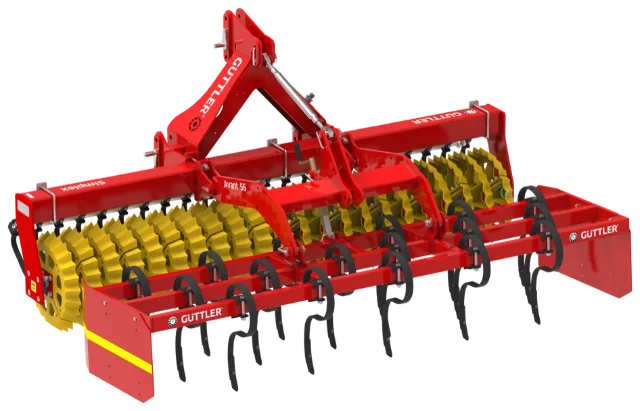
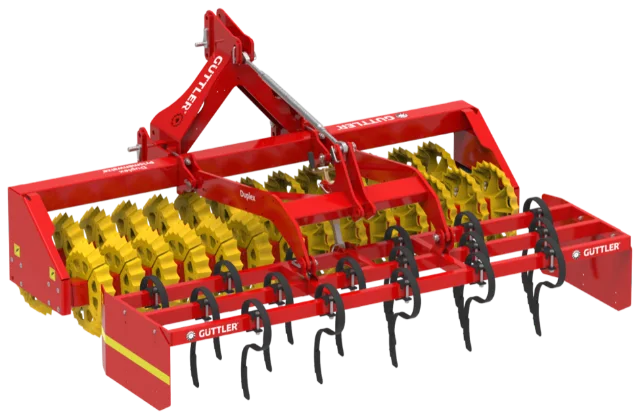

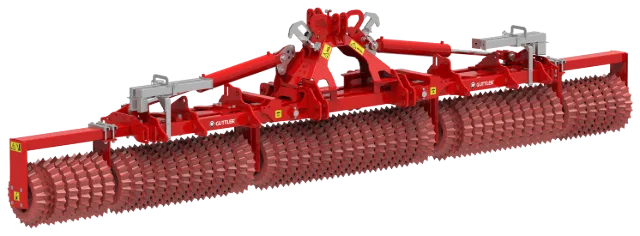

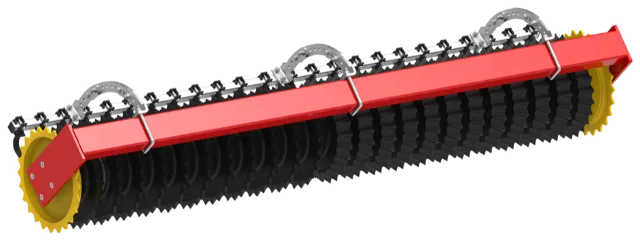
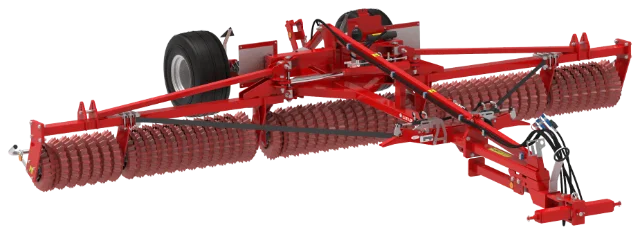
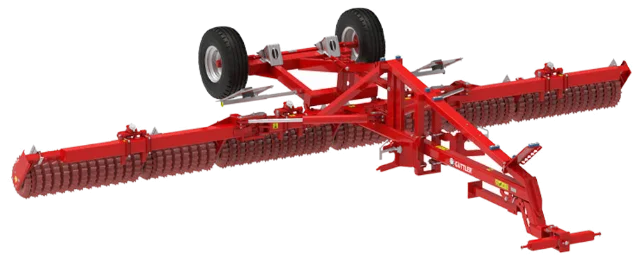
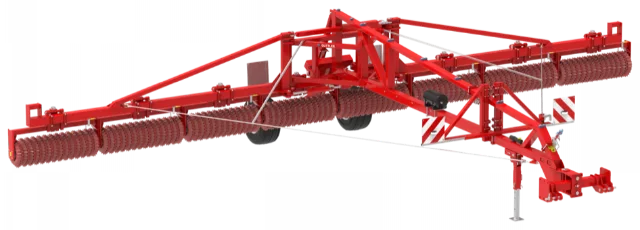
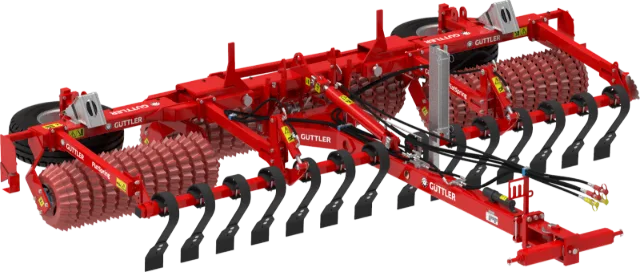



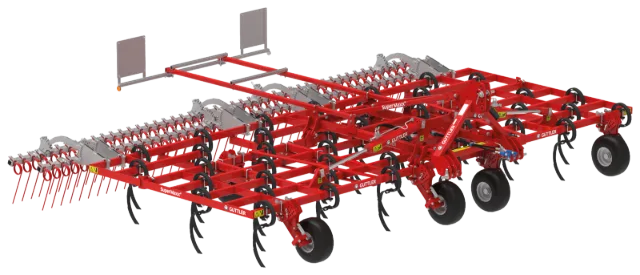
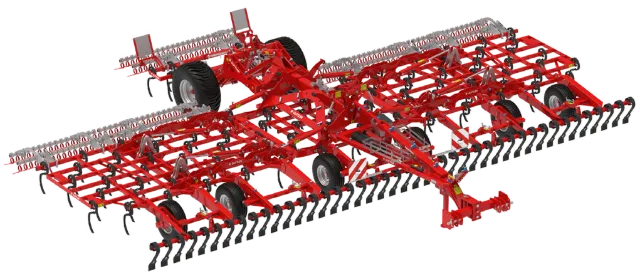
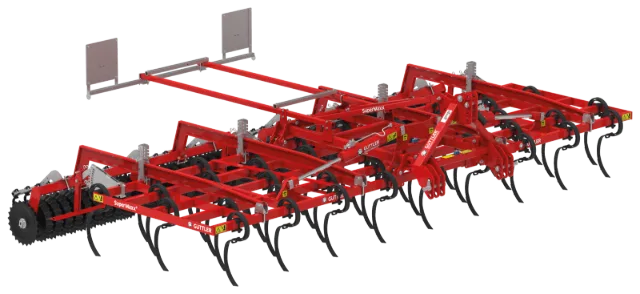
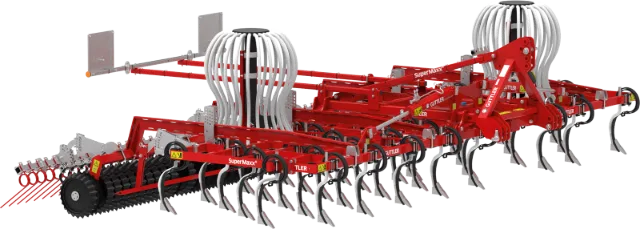
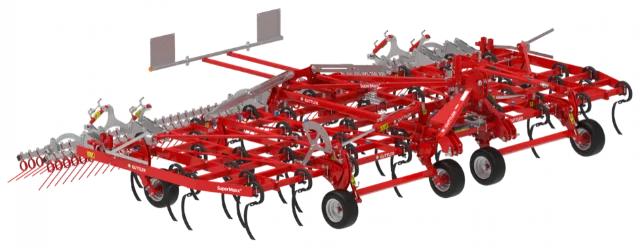

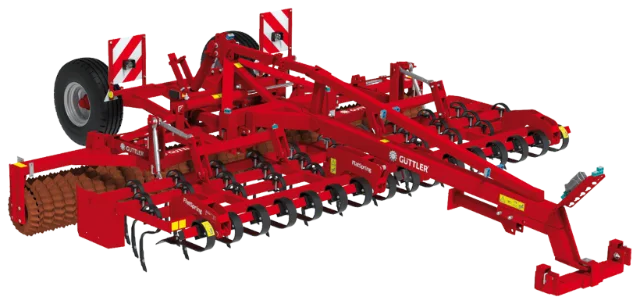
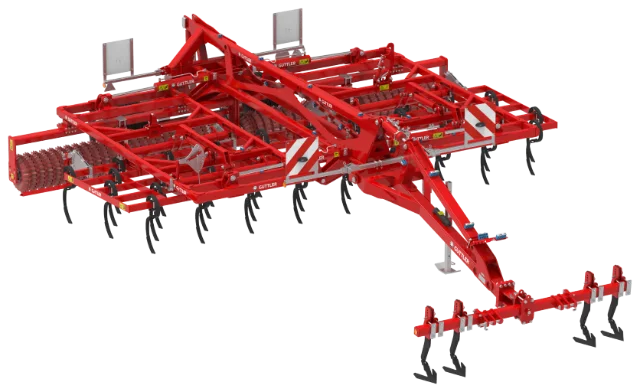
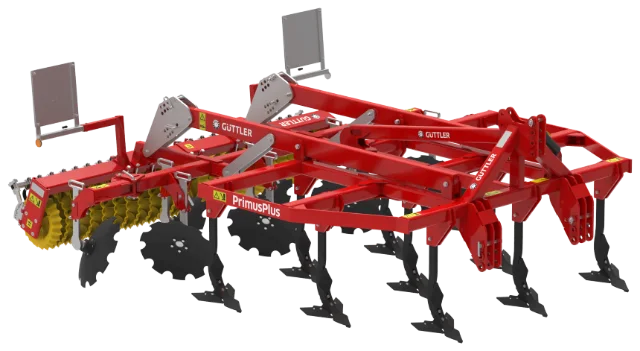
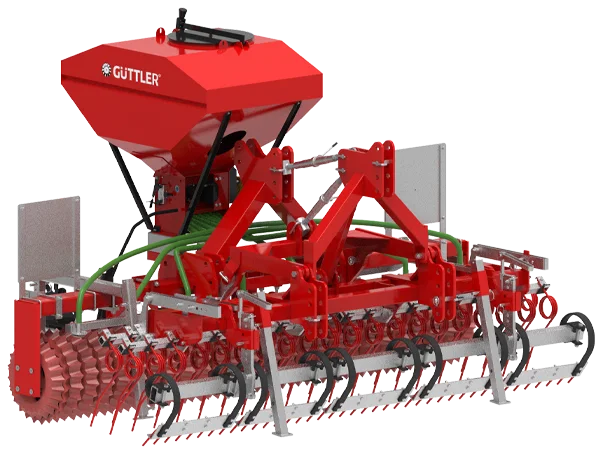
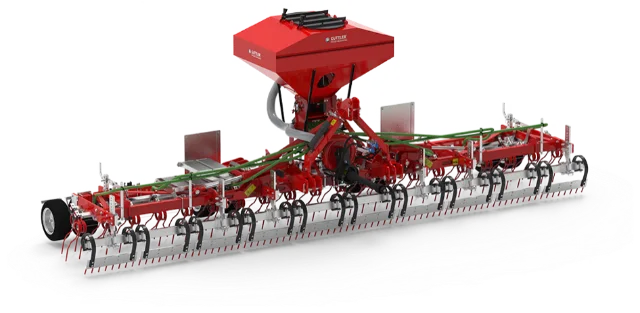
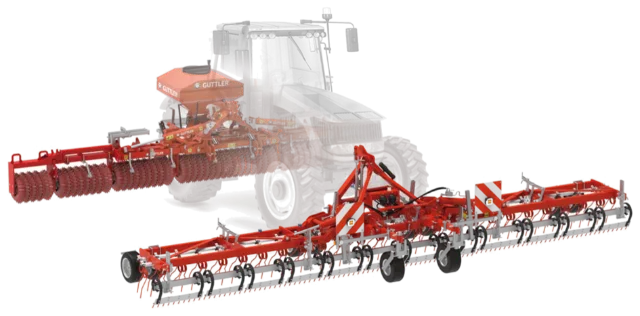
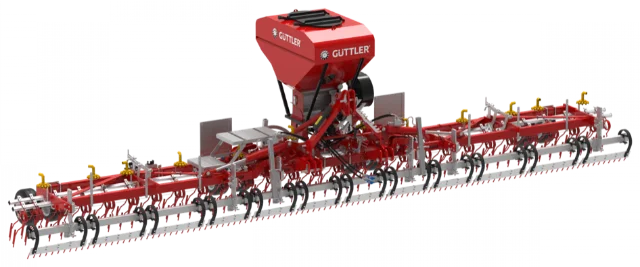
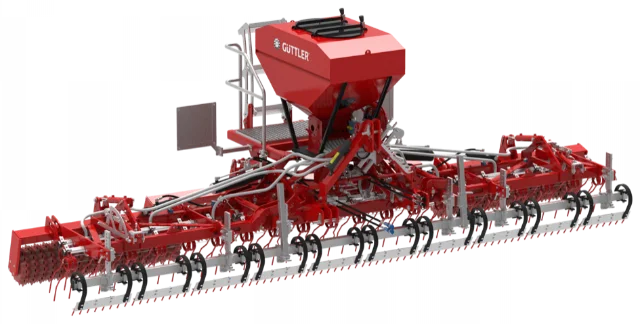
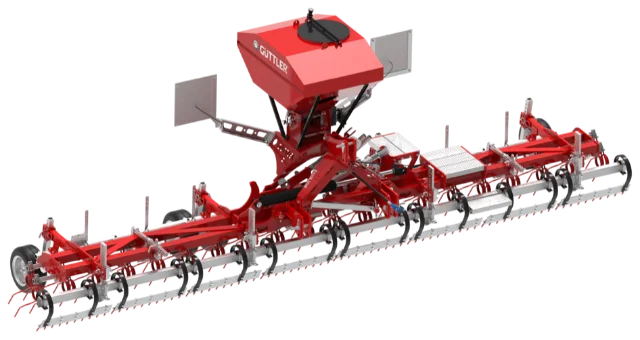



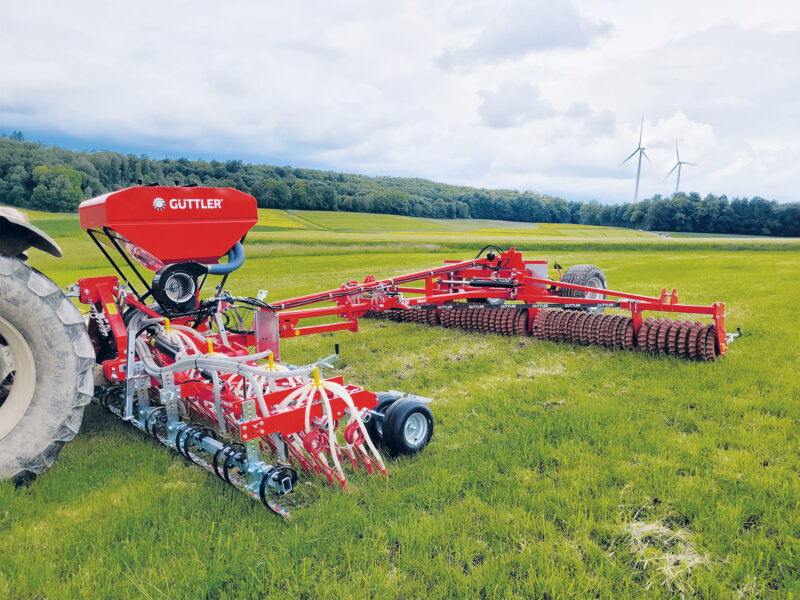
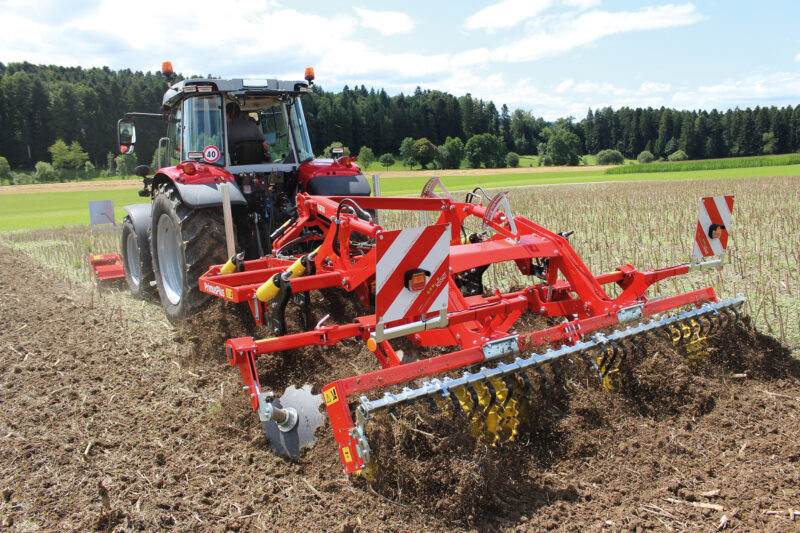
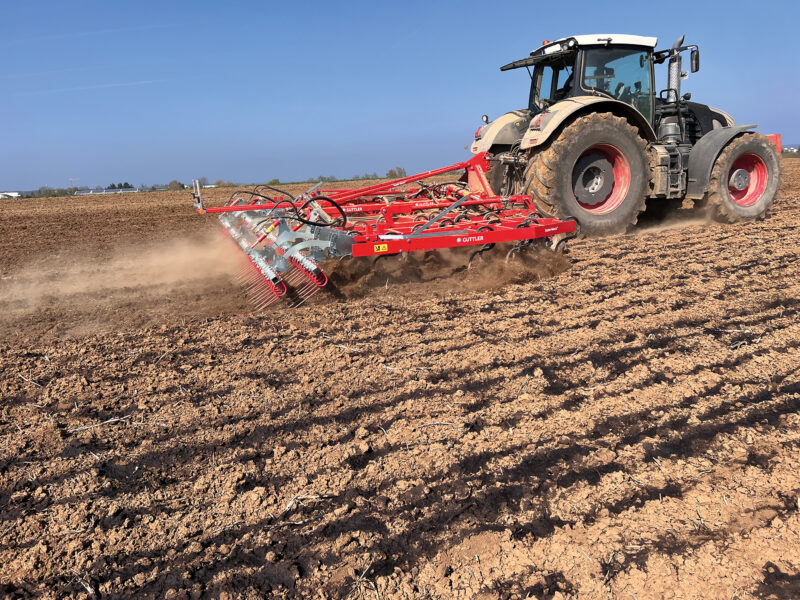
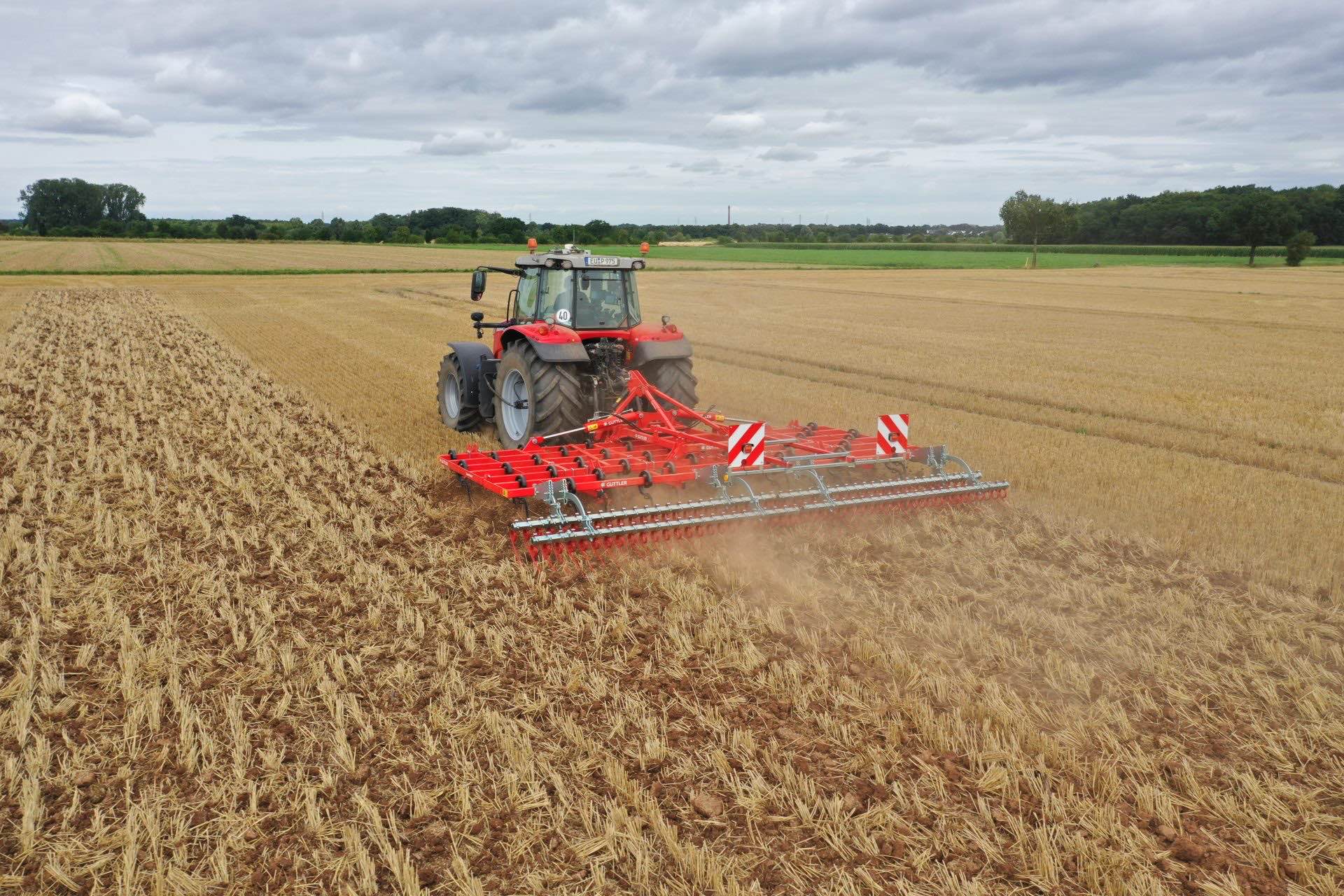

The Super Maxx® BIO easily reaches working depths of up to 15 cm and penetrates reliably even in dried-out soils. For the first stubble pass, however, it is better to work shallow with the narrow point to begin with. The GÜTTLER Super Maxx® BIO breaks capillarity, and the stubble and straw are mixed with soil to form a cover. Underneath it, a moist greenhouse climate develops for rapid and complete germination of weed seeds and volunteer cereals. Thanks to the high-frequency vibration of the double spring tines, enough fine soil is created on the very first pass, even in dry conditions, for volunteer cereals to germinate quickly. A second pass, e.g. 10 days later, uses the swept points to cut off the new growth of weeds and volunteer cereals across the full width and mixes the straw in near the surface so that it can then decompose quickly and completely. The double harrow reliably shakes the soil off uprooted weeds and germinated volunteer cereals, so that they dry out quickly on the surface. The GÜTTLER Super Maxx® BIO for mechanical weed control has a low draught requirement, so it can be used with small tractors too, saving fuel. You will find more information on the many benefits of the GÜTTLER Super Maxx® BIO on the following pages. We also invite you to watch our expert videos – or ask our sales team for a demonstration today.
Stubble cultivation with the GÜTTLER Super Maxx® BIO
- Valuable soil moisture is conserved
- Complete straw decomposition – no straw is buried
- Double spring tines create plenty of fine soil for rapid emergence of volunteer cereals and weeds
- Fuel-saving use, even with light tractors
- Mechanical weed control comes as a free bonus.


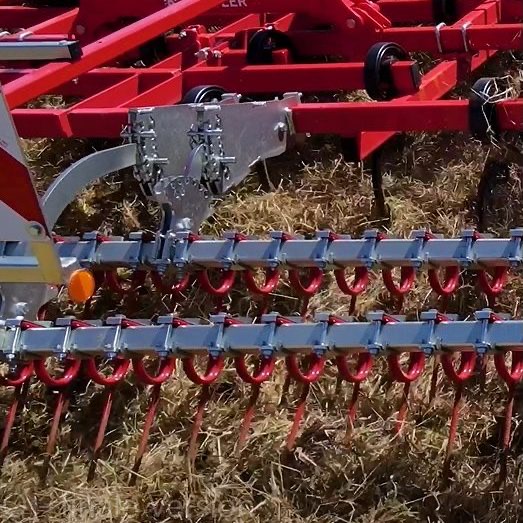
Super Maxx® BIO for stubble cultivation
Watch short video
 Video
Super Maxx®: second cereal stubble pass with swept points
Watch short video

Super Maxx® BIO · expert video 1Video · YouTube (opens in a new tab)Super Maxx® BIO · expert video 2Video · YouTube (opens in a new tab)
Practical tip from GÜTTLER · last updated 6 Aug 2024


